

Case Study 4
Meteorological Data Utilization and Comparison for Flood Prediction
This use case evaluates the integration of DTSI-P and DestinE by comparing the DestinE and ARSO meteorological models against real-life measurements in Slovenia. Our preliminary analysis benchmarks model accuracy to better understand their performance in regional atmospheric forecasting.
DestinE- weather forecast product
DestinE, short for Destination Earth, is a European Commission initiative aimed at developing a highly accurate digital model of the Earth.
Within DestinE, a forecasting meteorological model has also been developed, designed to provide high-resolution, near real-time predictions of atmospheric conditions. This model enhances the ability to anticipate extreme weather events, such as heavy precipitation and flooding, by combining observational data with advanced numerical weather prediction techniques. The overarching goal is to contribute to the design of accurate, timely, and actionable adaptation strategies and mitigation measures, enabling stakeholders, from policymakers to operational services, to better respond to climate-related risks.
ARSO-weather forecast product
The Slovenian Environmental Agency (ARSO) provides publicly accessible weather forecasts based on the ALADIN numerical weather prediction model. These forecasts are widely used for operational meteorology, offering regular updates on key atmospheric conditions including temperature and precipitation. ALADIN (Aire Limitée Adaptation dynamique Développement InterNational) is a limited-area numerical weather prediction model developed within a European consortium and adapted for regional forecasting. At ARSO, it is configured to deliver high-resolution forecasts calibrated to the specific geographical and climatic characteristics of Slovenia, making it a core component of Slovenia’s national forecasting system.
Challenge: Meteorological data and flood prediction
Both ALADIN and the DestinE meteorological model predict similar atmospheric variables; however, they differ in their underlying methodologies, spatial resolution, data assimilation techniques, and computational frameworks. DestinE leverages next-generation digital twin infrastructure, integrating large-scale Earth system modelling with advanced data processing capabilities, while ALADIN is a well-established regional model optimized for consistent operational use.
With accurate meteorological forecasts, it is possible to predict events such as droughts or floods. The meteorological variable most directly associated with flooding is precipitation (measured in millimetres of rainfall) over a specific area. However, the relationship is not straightforward, as many additional factors influence flood occurrence, including geographical characteristics such as relief, microclimate, and elevation.
Comparison of different meteorological forecast models
GeoCodis conducted a preliminary comparison analysis to get a better insight into understanding the accuracy of different meteorological models and their potential to be used in flood forecasts in Slovenia. The analysis was conducted by comparing data from DestinE and ALADIN models against meteorological stations in situ measurements from ARSO archive service across Slovenia. This approach enabled an assessment of how each model performs relative to ground truth data under Slovenian conditions.
Results of the comparison
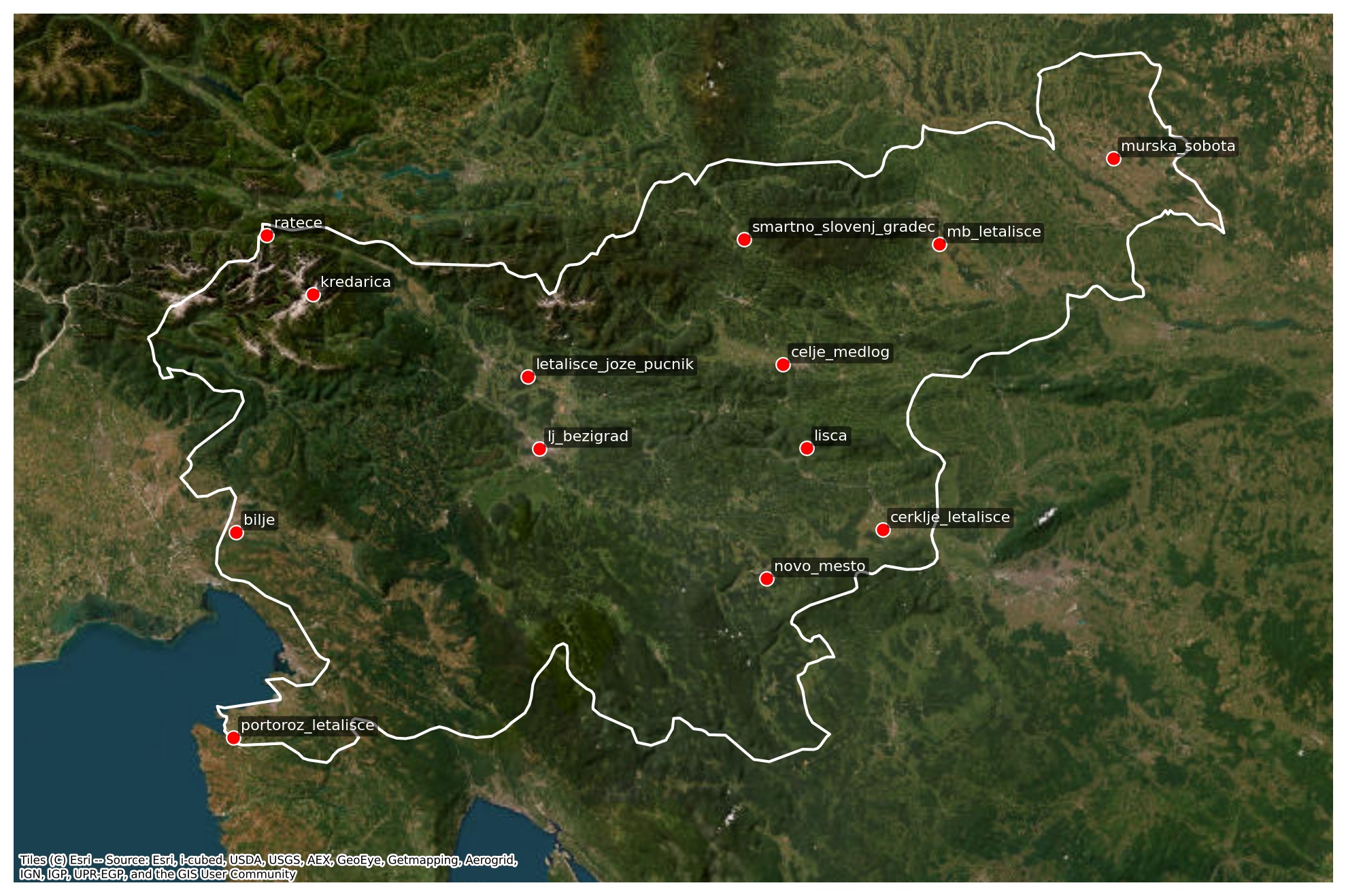
Over a one-month period (from 18 February to 18 March), and across these 13 stations, we compared two meteorological variables:
- air temperature at 2 meters above ground (T2m, in °C)
- accumulated precipitation (in mm)
For each station, ARSO ground measurements were compared against forecasts from both models at multiple lead times: 12, 24, 36, 48, 60, and 72 hours.
For temperature, the comparison is performed at the exact valid time (instantaneous value).
For precipitation, the comparison is performed using accumulated precipitation over the corresponding time window (e.g., 24-hour accumulation for a 24-hour lead), ensuring consistency between observations and forecasts.
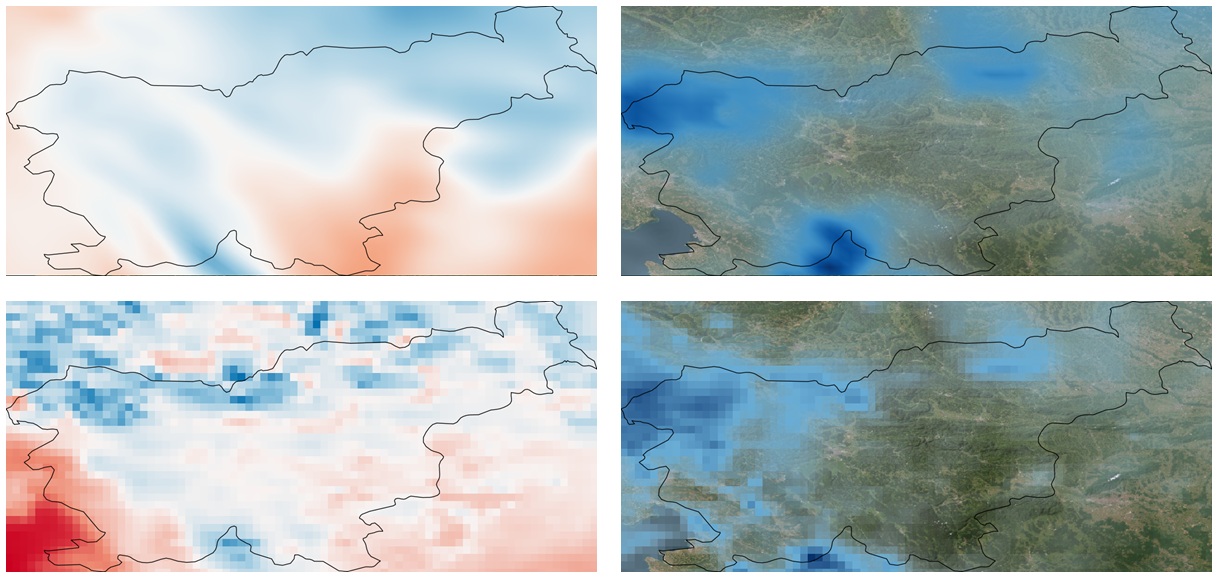
As an illustration, the figure below shows example forecast fields corresponding to a 72-hour forecast over Slovenia, initialized on 18 February 2026 at 00:00 UTC (valid on 21 February 2026 at 00:00 UTC). The first row presents T2m and accumulated precipitation from ARSO ALADIN, while the second row shows the corresponding fields from DestinE.
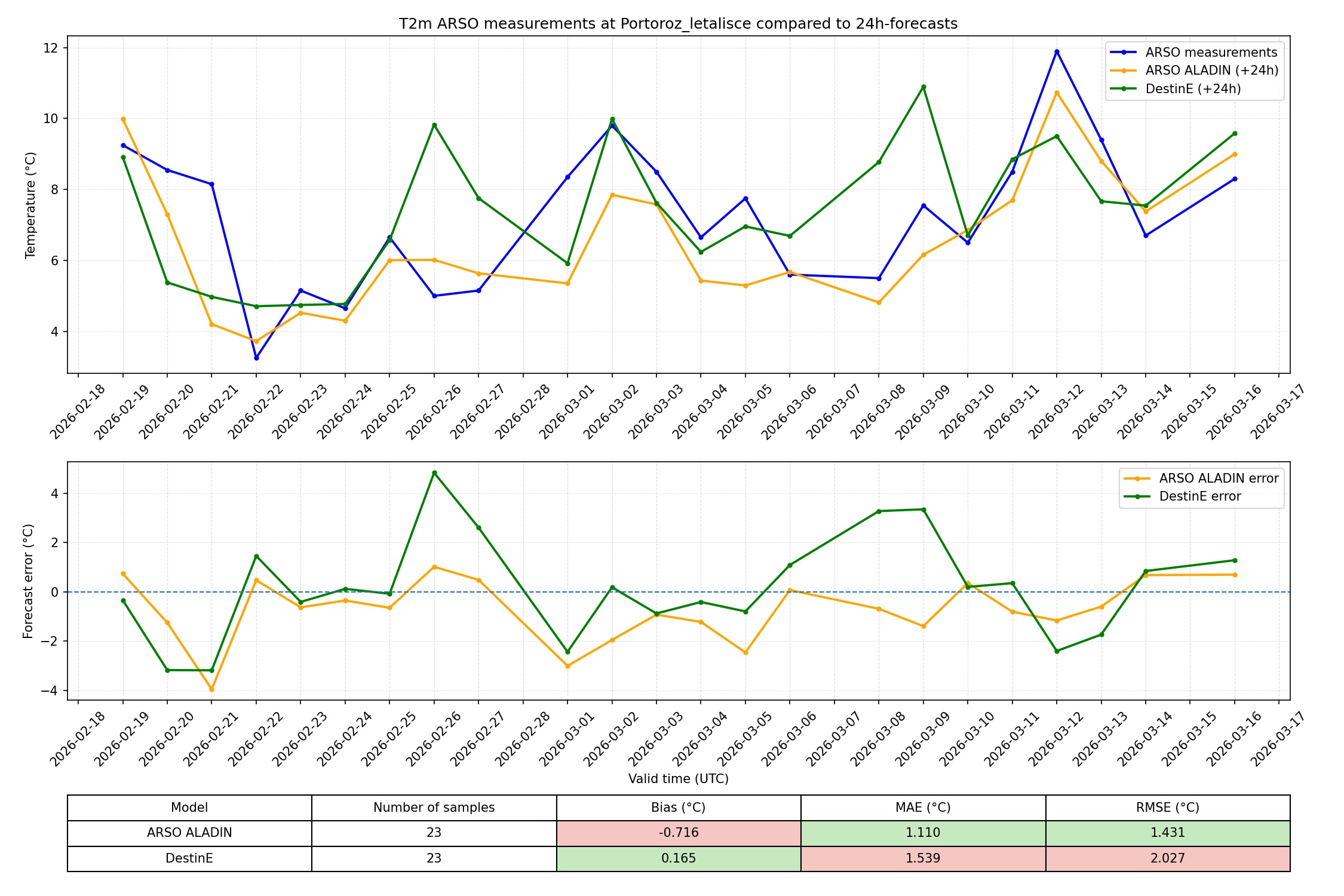
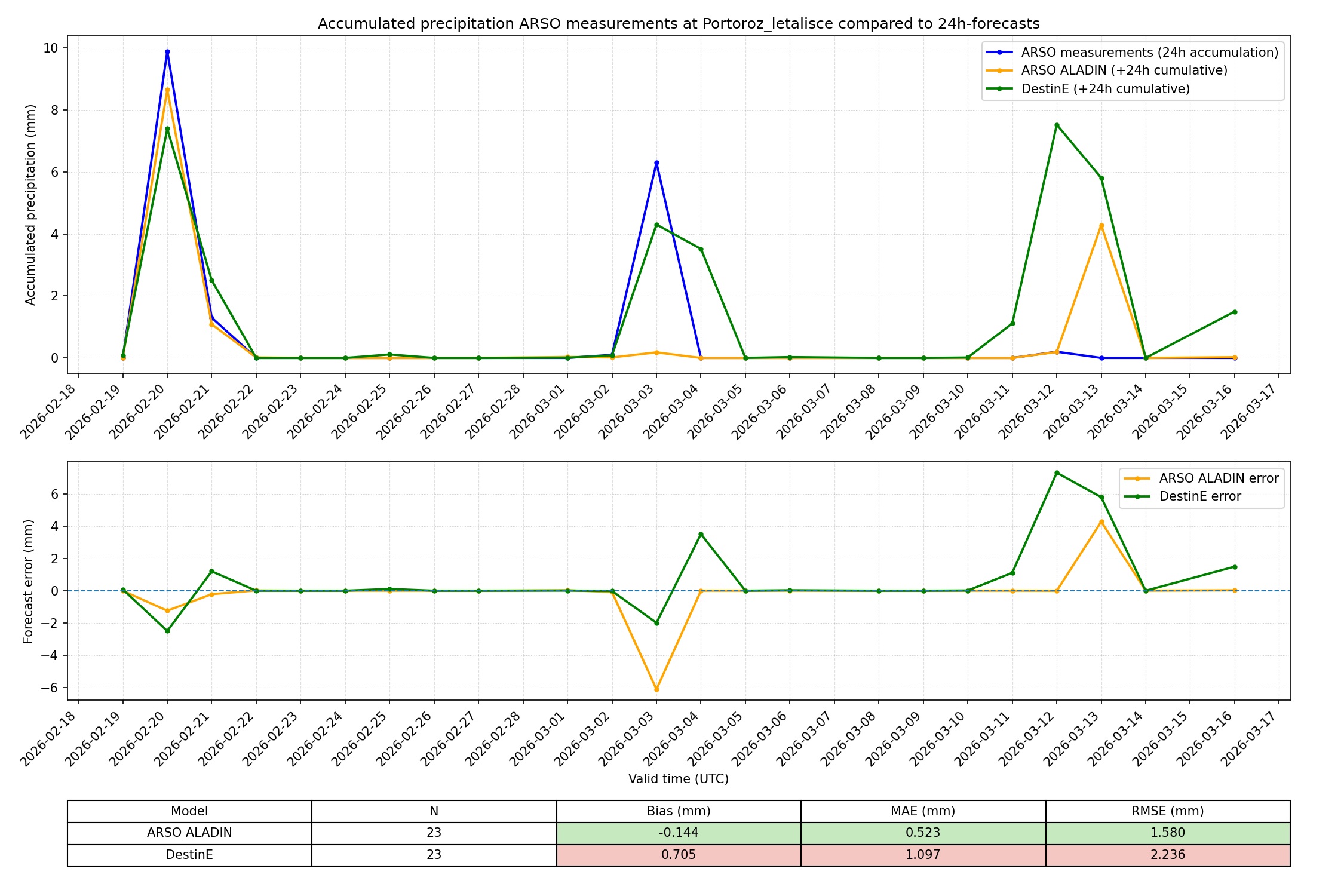
The following plots show the comparison at the Portorož–Letališče station for 24-hour forecasts over the study period. Similar plots were produced for precipitation.
Each figure contains three components:
- Top panel: ARSO observations and model forecasts
- Middle panel: forecast error (forecast − observation)
- Bottom table: summary metrics
- Bias: mean error (indicates systematic over/underestimation)
- MAE: mean absolute error (average magnitude of errors)
- RMSE: root mean square error (penalizes large errors more strongly)
In the tables, green cells indicate better performance (lower error), and red cells indicate worse performance.
Conclusion
This preliminary one-month analysis provides a structured dataset comparison rather than a full evaluation of high-impact conditions. Both models performed comparably for temperature, while for precipitation; DestinE generally outperformed ALADIN, especially at shorter forecast times. Due to the limited timeframe, these results should be interpreted with caution. Future work should extend the study period and focus on extreme events like flooding to better refine these systems for risk assessment